
Save Hours Every Day with AI Clinical Documentation Rooted in Medical Facts
Notat.ai Team
May 12, 2026 · 5 minutes
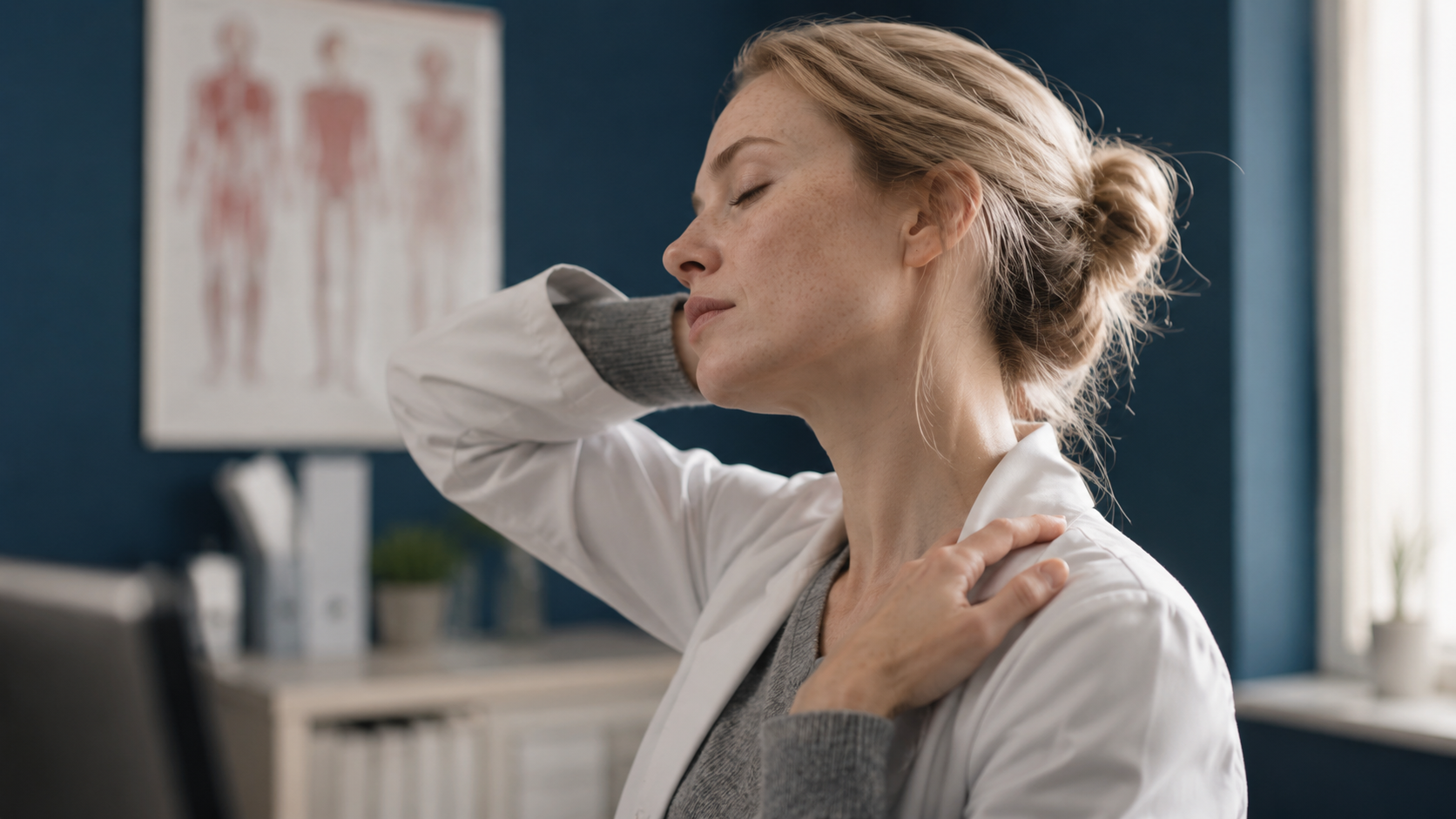
AI clinical documentation for doctors and specialists. Save hours every day with Notat.ai, a facts-first ambient AI scribe for SOAP notes, ICD-10 coding, and medical summaries.
# Save Hours Every Day with AI Clinical Documentation Rooted in Medical Facts
Clinical documentation should support the consultation, not compete with it. Yet in practices across specialties, the end of the last patient visit marks the beginning of another shift — charting, coding, rewriting, and following up on notes from a day that ended hours ago.
For a GP seeing 25 patients a day, that can mean two additional hours of typing after the clinic closes. For a specialist managing complex cases, it can stretch even longer. The documentation burden is not just a time problem. It is a clinician wellbeing problem, a patient safety problem, and a practice efficiency problem. Facts-first AI clinical documentation changes that equation.
The real cost of documentation
Research consistently shows that clinicians spend nearly two hours on EHR and documentation tasks for every hour of direct patient care. After-hours charting — sometimes called "pajama time" — has become a normalized part of medical practice. But the cost is real: higher burnout rates, less time with family, and reduced attention during the next clinic day.
Poor or rushed documentation carries clinical consequences too. Incomplete notes can lead to missed follow-ups, coding errors that affect reimbursement, and gaps in the patient record that the next treating clinician has to fill in. When documentation becomes a second job, both the clinician and the patient lose.
Why medical facts matter more than raw transcription
The first generation of AI documentation tools focused on transcription — converting speech to text. That sounds helpful in theory. In practice, a raw transcript from a 20-minute consultation can run several pages. It contains small talk, patient hesitation, repeated information, and conversational tangents alongside the clinical content that actually needs to be documented.
The important question is not simply "What was said?" It is "Which medical facts should be documented and where do they belong in the record?"
Notat.ai focuses on structured clinical extraction across categories that matter to the medical record: chief complaint, history of present illness, past medical history, medications, allergies, review of systems, physical examination findings, assessment, plan, and follow-up instructions. Each note starts from the clinical substance of the encounter rather than from a wall of transcribed speech.
That distinction — clinical signal separated from conversational noise — is what makes the output usable without heavy editing. A facts-first AI scribe understands that a patient saying "my knee has been bothering me since I slipped on the ice last Tuesday" contains three clinical facts: the symptom (knee pain), the mechanism (fall on ice), and the timeline (five days). A transcription tool records the sentence. A facts-first tool structures the information.
How facts-first AI saves hours every day
The time savings come from eliminating the cycle of recall, type, and revise that dominates traditional documentation:
SOAP notes drafted from the consultation. Instead of reconstructing the visit from memory or scribbled notes, you review a structured draft organized by clinical category while the conversation is still fresh.
ICD-10 suggestions derived from clinical content. The system identifies the conditions discussed and suggests relevant codes, reducing the coding step from a search task to a review task.
Patient summaries written in plain language. After-visit summaries that patients can actually read and understand improve adherence and reduce follow-up questions. Notat.ai generates these from the same clinical facts used for the professional note.
Follow-up items and care plans captured automatically. When a clinician says "I want to see you back in six weeks for repeat labs," that instruction becomes part of the plan section without extra typing.
Templates that match your specialty. A GP, a physiotherapist, and a psychiatrist document very different visits. Notat.ai adapts its output to match the structure and terminology your specialty requires, whether that is SOAP, APSO, or a custom format.
For a clinician seeing 20 patients a day, even 5 minutes saved per encounter adds up to nearly 7 hours reclaimed each week. That time goes back to patients, to clinical reasoning, or simply to leaving the clinic at a reasonable hour.
Clinician control, always
Notat.ai is designed as documentation support, not autonomous medical decision-making. The clinician always reviews, edits, and approves the final note. That review step is not a workaround — it is the core of safe AI adoption in clinical settings.
The AI produces a better first draft, not a finished chart. It handles the time-consuming work of structuring and categorizing information from natural conversation. The clinician applies judgment, adds nuance, and confirms the record is accurate. This human-in-the-loop workflow keeps the clinician in control of the medical record while removing the most repetitive parts of documentation.
Documentation that fits modern care
Notat.ai supports multilingual clinical workflows and is built for the full range of clinical environments: GP offices, specialty clinics, hospitals, outpatient departments, telehealth platforms, and virtual consultations. It works for doctors, specialists, physiotherapists, psychologists, and allied health professionals who need documentation that reflects their specific clinical context.
The result is a calmer documentation process: less after-hours charting, fewer blank-note moments staring at an empty screen, and more energy for the work that brought clinicians into medicine in the first place.

The takeaway
AI clinical documentation delivers its greatest value when it is grounded in medical facts rather than raw transcription. Notat.ai helps clinicians turn natural patient conversations into structured notes, accurate coding suggestions, and clear patient summaries — so documentation happens closer to the point of care, and the day ends closer to when the last patient leaves.